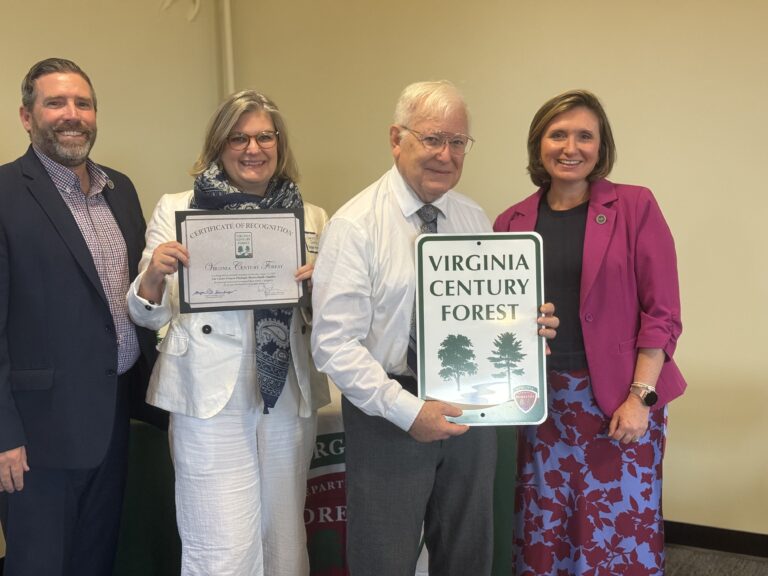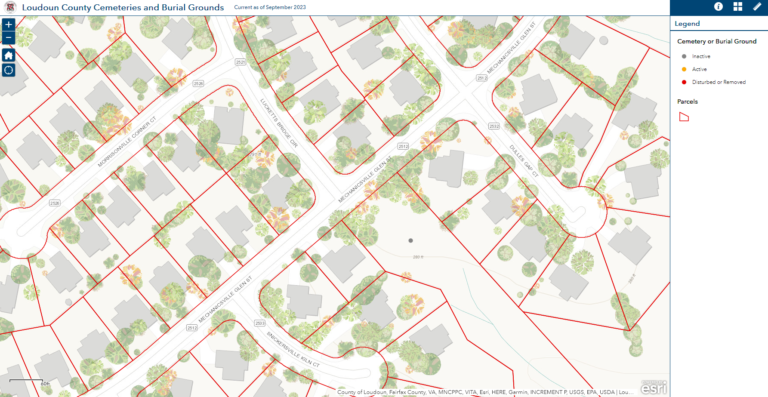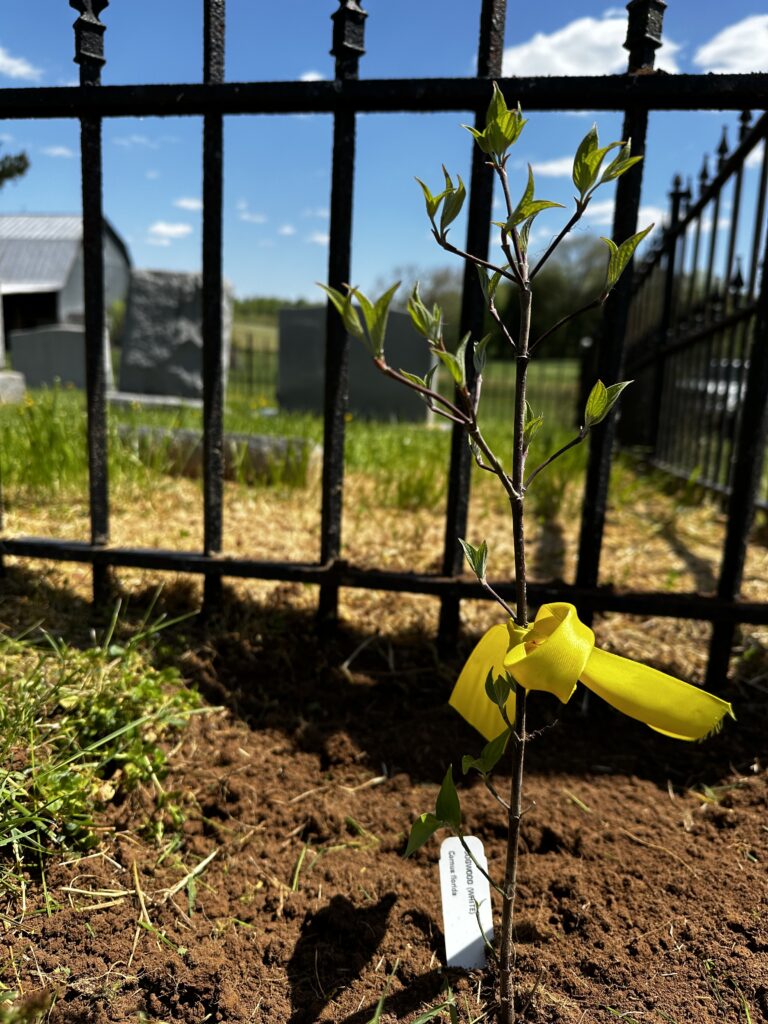
:: As of this writing, July 2026, Poplar Grove Farm is waiting for its Century Forest application to be approved ::
“Never have I been any place else where … the sense of nature and the sense of history have merged so intimately and given me such a sense of the community of things. I have been places that have impressed me because of their wildness, but at Poplar Grove Farm, there is a sense of something else — a sense of long-standing relationship between people and nature.”
– Larry Evans
About the Century Forest at Poplar Grove Farm
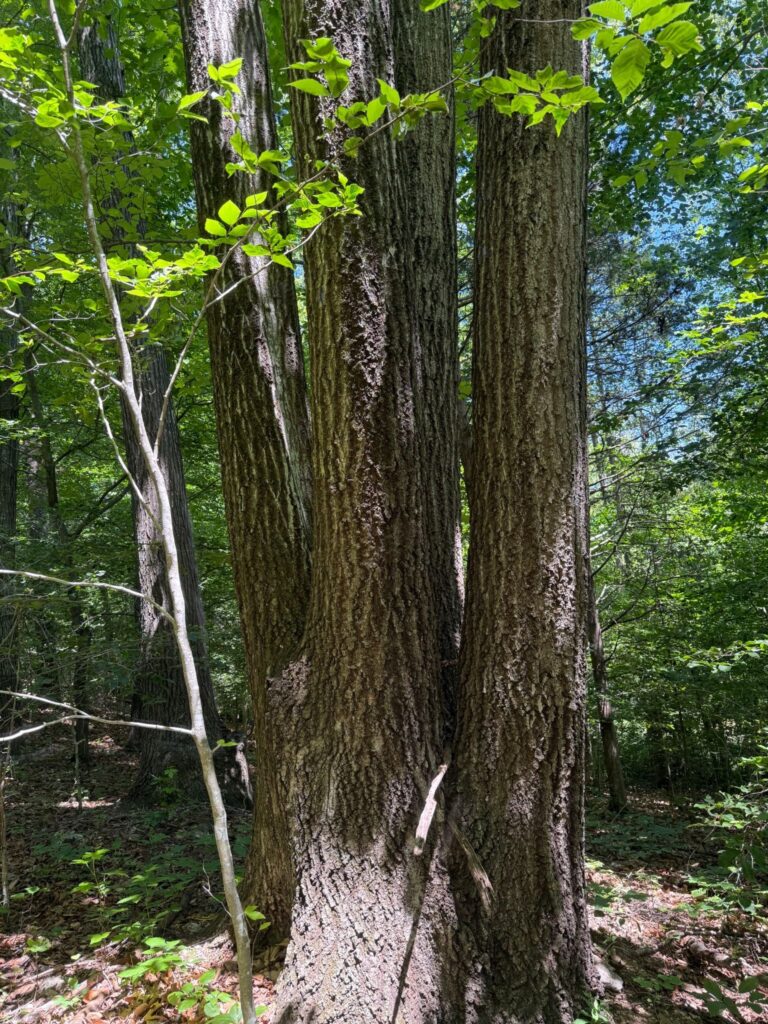
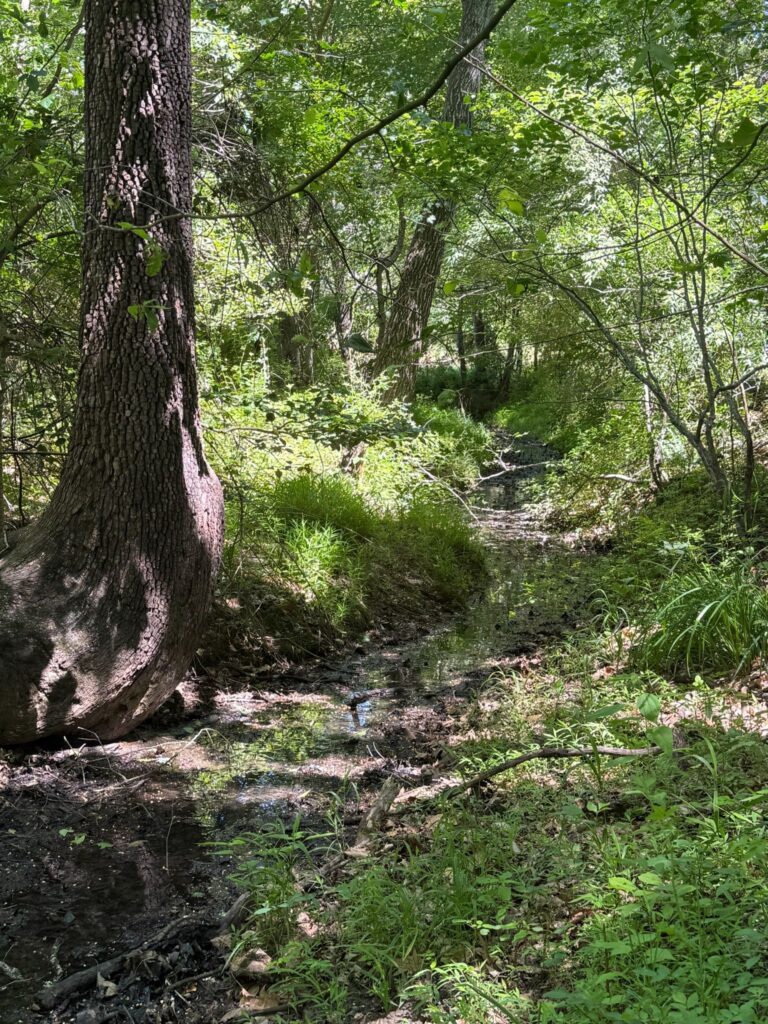
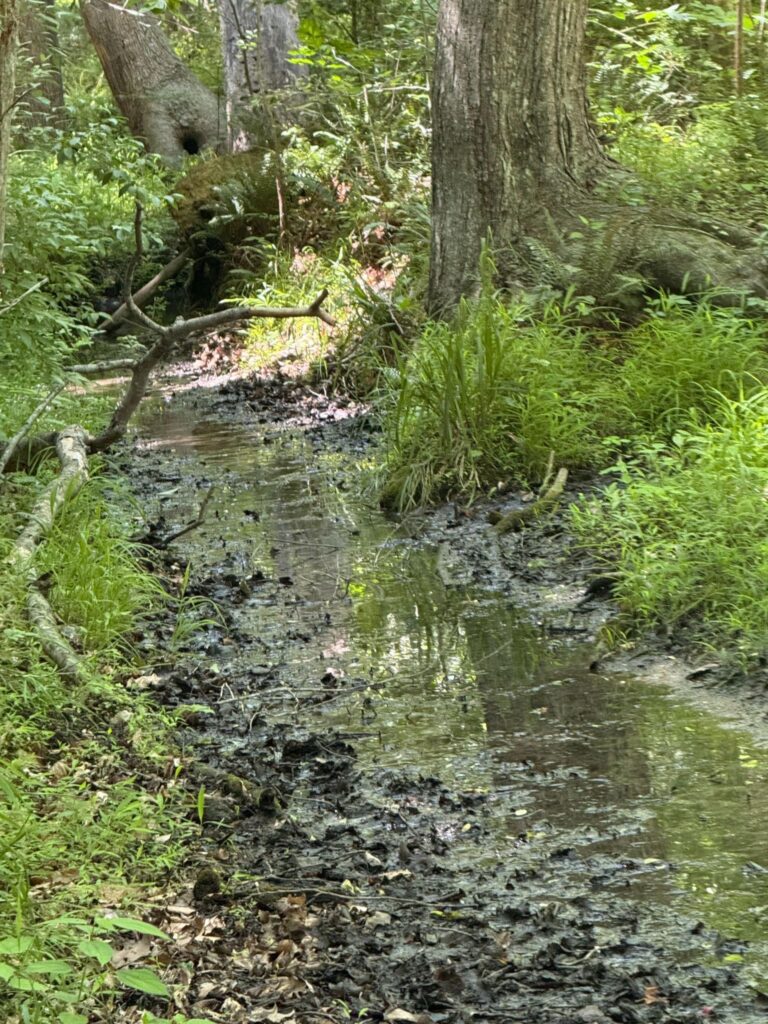
The 115-acre tract of the Poplar Grove Farm Century Forest Project is geologically and historically unique. This tract is part of the 365 acre Poplar Grove Farm which has been in the Curtis-French-Fitzhugh-Moore-Smith families for over 200 years. The forest includes trees hand selected by John French Fitzhugh for preservation, the unique geologic formation called the Devil’s Backbone, and the French Branch, fed by a spring which has provided water to human beings at Poplar Grove farm for thousands of years.
Pre-history
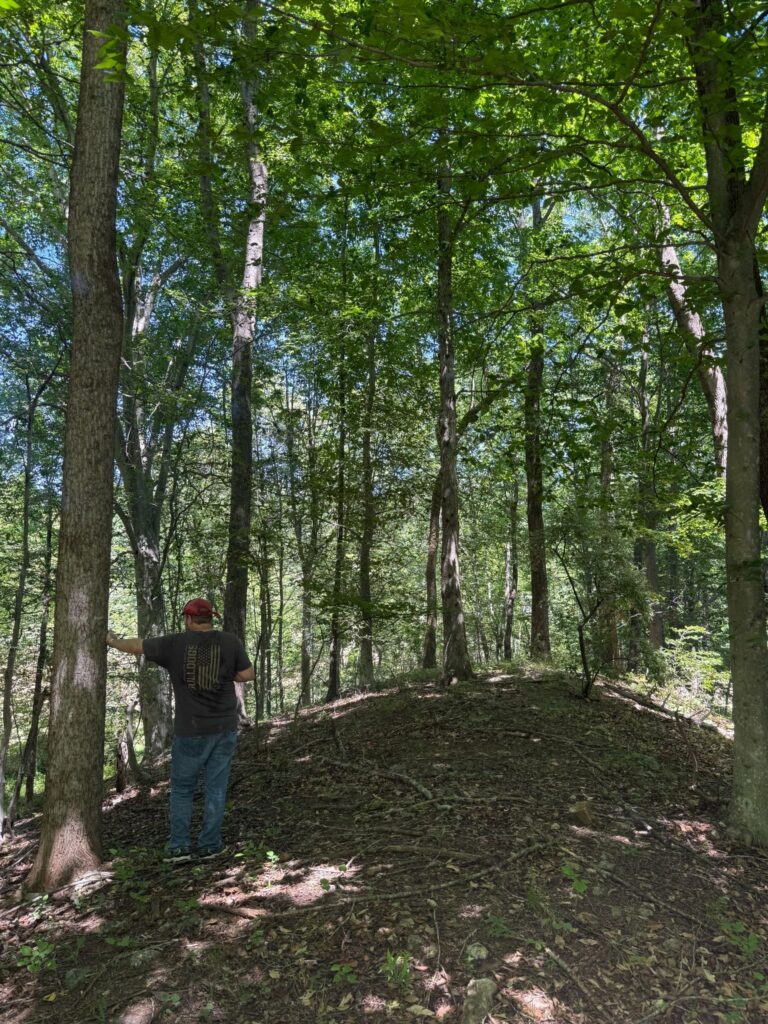
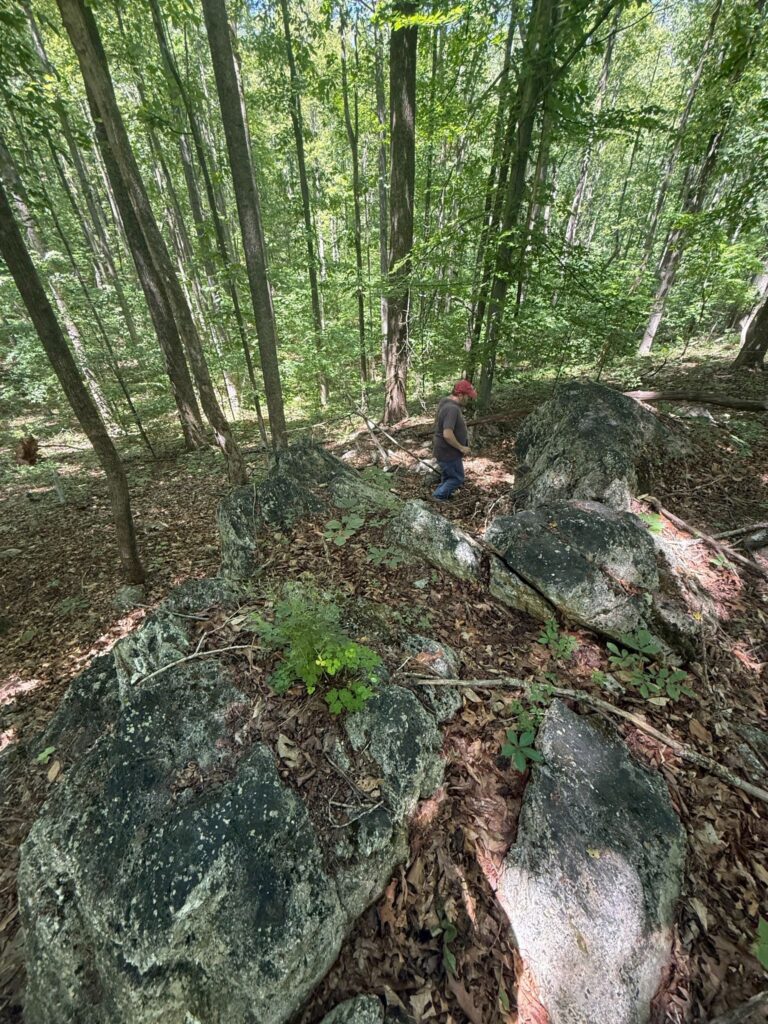
The terrain of the Century Forest contains the Devil’s Backbone, a narrow, stony ridge that is a spur of the Appalachian Mountains. When North America was part of Pangea, Poplar Grove Farm was near what is now the Scottish Highlands. As the continental plates spread apart, the stony mountains broke and stretched apart, leaving some long thin threads behind, like the Devil’s Backbone at Poplar Grove Farm. In addition, as the land split, many springs opened up allowing water deep below the stone to reach the surface, like the French Branch located in the Century Forest.
The Devil’s Backbone is several hundred feet long with several rocky outcroppings, and at its tip the Backbone is only about 8 feet wide. Hundreds of trees have grown into the rocks along the steep sides of the Backbone, preventing the backbone from collapsing into the French Branch at its base. The trees and stones work in symbiosis with riparian barriers, providing clean spring water to Poplar Grove Farm.
Millions of years later, the first people arrived on the American continent beginning in about 18,000 BCE. These early peoples hunted on Poplar Grove Farm. We have found many of their tools including points, arrowheads, and tomahawks all over the farm and Century Forest. Some of these Native Americans may have been Patawaomeck Indians, from whom the Curtis and French families are descended.
Late 1700s to 1814 – The Quakers
The first European settlers to live permanently at Poplar Grove Farm were Quakers who lived at Poplar Grove Farm in the late 1700s to 1800s. The Quakers named Poplar Grove Farm after non-native Lombardy poplar trees they’d planted on what is now Poplar Grove Farm and other locations in Stafford. Poplar Road derived its name from these striking trees. The Quakers built a springhouse, fed by what is now called the French Branch, that still provides water to the farmhouse, Smith home, and crops grown on the farm today.
By 1814 Quakers had left Stafford County because the Ironworks where they worked closed in Falmouth and because of religious persecution, some of which was related to their position opposing slavery.
1807? to 1830 – George Curtis, Junior
George Curtis, Jr., began buying up property that had belonged to Quakers and to Robert Carter of Ludlow. He bought parts of what became Poplar Grove Farm beginning in 1807. Exact dates of these purchases can not be determined, because land records were burned during the Civil War.
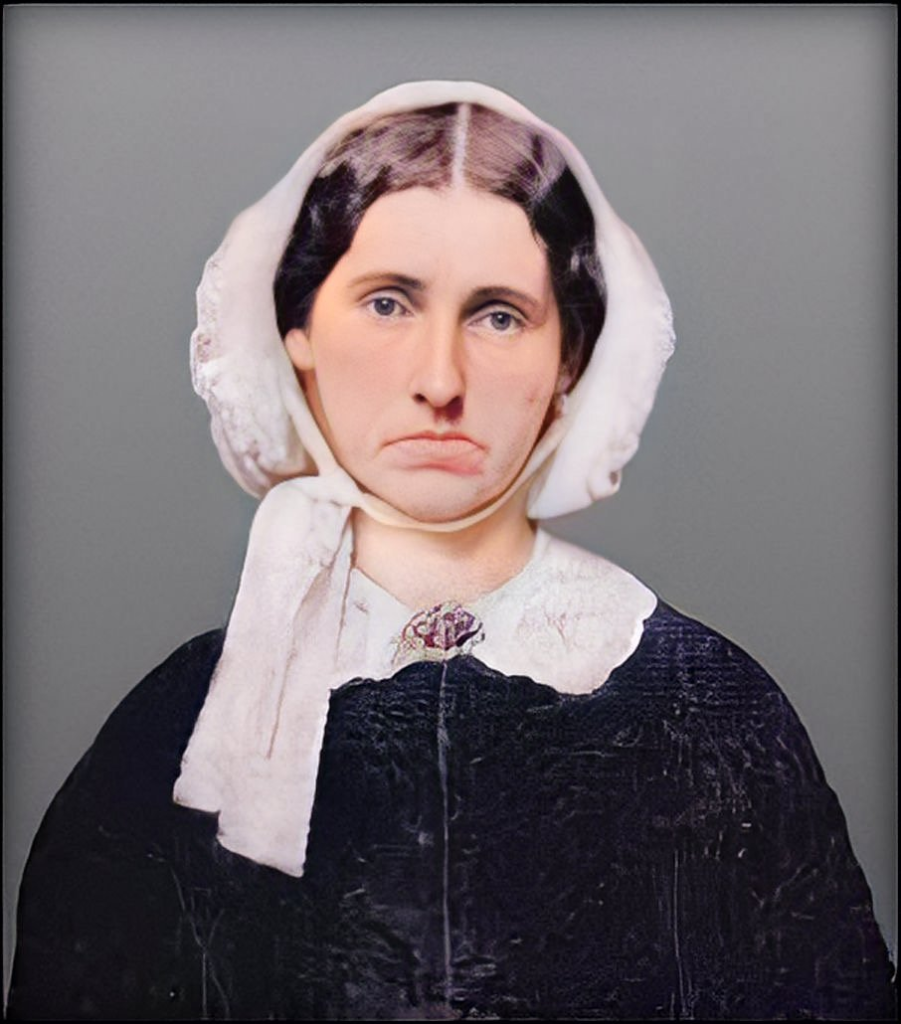
1830 to 1925 – The Frenches
Sarah Curtis, daughter of George Curtis, was given Poplar Grove Farm as her wedding dowry when she married James French in 1830. Sarah Curtis French is the first member of our family to live permanently at Poplar Grove Farm.
Land records regarding the purchase of the farm were burned during the Civil War, however, the will of George Curtis remains, mentioning Sarah and Poplar Grove Farm:
[I]t is my will and desire that my daughter Sally French, shall have the tract of land whereon she now resides called Popular Grove at five dollars per acre
Will of George Curtis French
During the Civil War, Union troops occupied Stafford County and took food and horses from Stafford families, including the Frenches. A former slave named Sam told the family that during the Civil War, James French, husband of Sarah Curtis French, asked Sam to carry a box that held money, gold, jewels, and other valuables toward the area of the Century Forest. James had Sam carry a shovel as they walked together. When they reached the granary, James told Sam to return to the house. Sam said he saw James carrying the box toward the rugged, uncultivated part of the farm known as the Devil’s Backbone on the south edge of the Century Forest. James died in 1865 just a few weeks after the end of the war and never retrieved the box. Despite many searches with shovels and metal detectors, nobody has ever found the Poplar Grove Treasure — it may still be hidden on the Devil’s Backbone in the Century Forest!
Sarah’s son, Uriah French, was the first family member buried at the farm. He was a soldier who died during the Civil War near Richmond. Sarah left her farm to her son, John I. French.
1925 to 2023 – The Fitzhughs
John I French left Poplar Grove farm to his four children, splitting the farm roughly in half, east-west along Poplar Road. John I’s three daughters received the 365 acres of the farm where the family still resides on the west side of Poplar Road, and his son, Hugh, received the roughly 400 acre portion of the farm on the east side of Poplar Road. Hugh’s part of the farm has gone out of the family and is now the Poplar Estates subdivision.
One of the French sisters, Sallie, married Lee Brockenborough Fitzhugh. After a disastrous experience in Oklahoma, involving the Spanish flu and a standoff at gunpoint, they moved back to Poplar Grove Farm. Two of Sallie’s sisters, Edna (Pilcher), and Lula (Crockett), had moved away from the farm with their husbands, and so they transferred their portions of the farm to their sister, Sallie French Fitzhugh, in order to keep the old homestead in the family.
Before 1937, Sallie French Fitzhugh was interviewed by the WPA as part of a project to document farms in Virginia. Photographs of the farm were taken, as well as an oral survey of the property and its history. The photographs show images of the farm as it was in the 1930s, and Sallie’s interview mentions the Lombardy Poplar trees that Quakers once planted on the property.
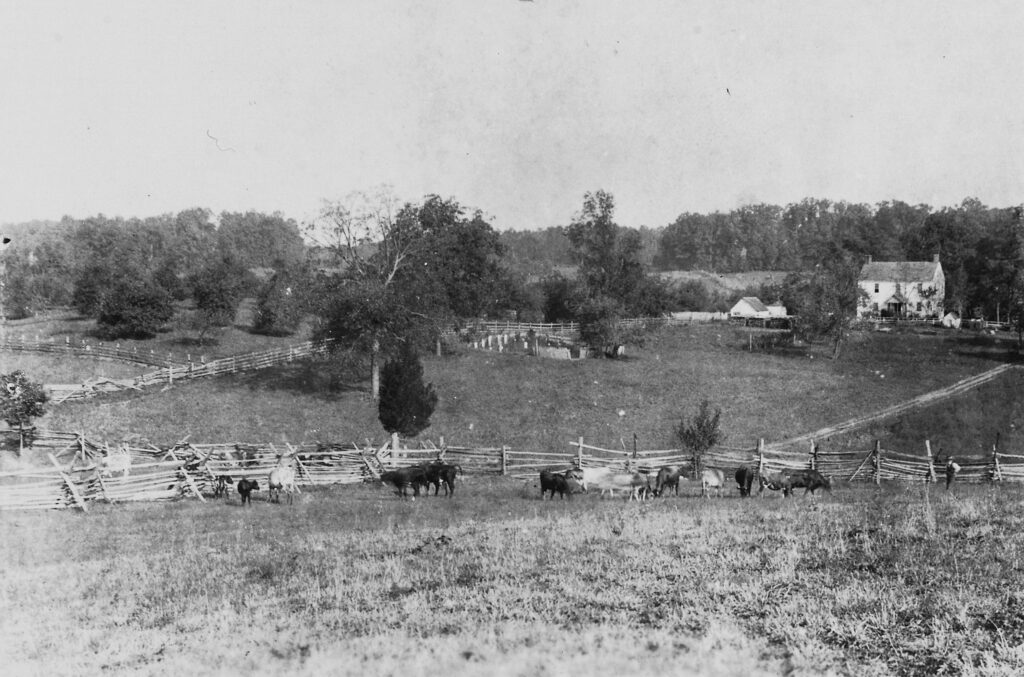
VHIP/27/0171 – Poplar Grove house and farm (no. 2), Heflin, Julia Marie, photographer., Creation Date: March 13, 1937, 1 photographic print : b&w ; 7 x 10 cm.
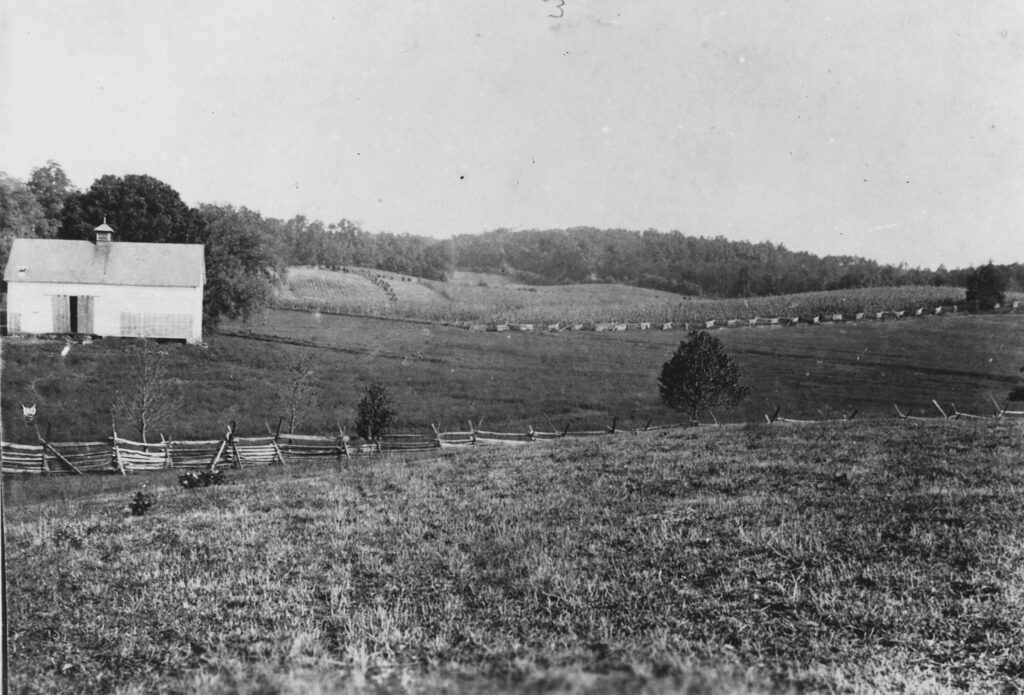
VHIP/27/0172 – Poplar Grove house and farm (no. 3), Heflin, Julia Marie, photographer., Creation Date: March 13, 1937, 1 photographic print : b&w ; 7 x 10 cm.
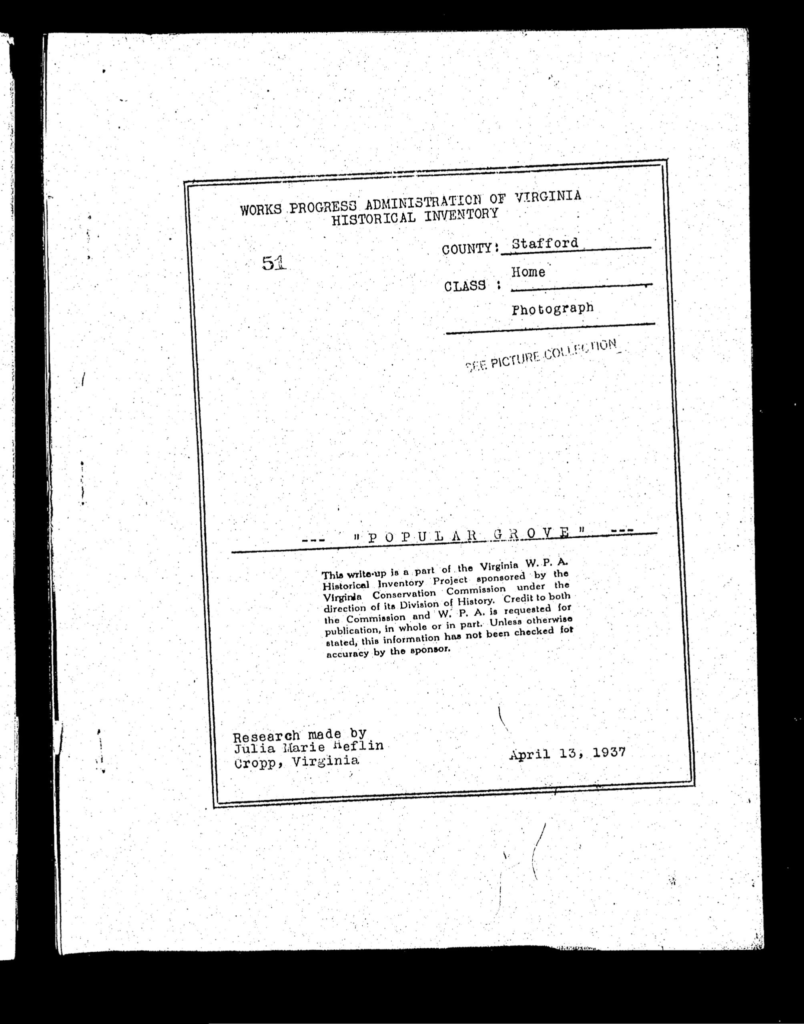
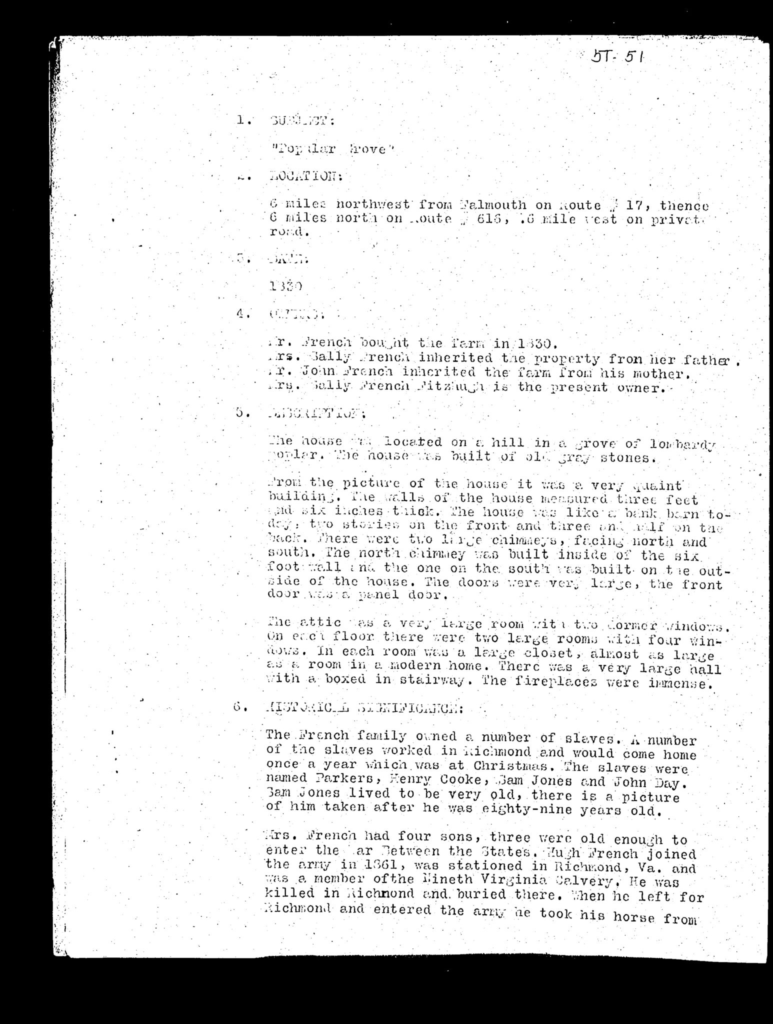
WPA Project mentioning unique Lombardy Poplar trees at Poplar Grove Farm
This write-up is part of the Virginia W.P.A. Historical Inventory Project sponsored by the Virginia Conservation Commission under the direction of its Division of History. Credit for both the Commission and W.P.A. is requested for publication, in whole or in part. Unless otherwise stated, this information has not been checked for accuracy by the sponsor.
Research made by Julia Marie Heflin Cropp, Virginia
April 13, 1937
SUBJECT: “Popular Grove”
LOCATION: 6 miles northwest from Falmouth on Route 17, thence 6 miles north on Route 616, .6 mile west on private road.
DATE: 1830
???: Mr. French bought the farm in 1830. Mrs. Sally French inherited the property from her father. Mr. John French inherited the farm from his mother. Mrs. Sally French Fitzhugh is the present owner.
DESCRIPTION: The house is located on a hill in a grove of lombardy poplar. … Mrs. French had four sons, three were old enough to enter the War Between the States. Hugh French joined the army in 1861, was stationed in Richmond, Va. and was a member of the Nineth Virginia Calvery [sic]. When he left for Richmond and entered the army he took his horse from from [sic] home. After he was killed his horse and clothes were sent home to his mother, Mrs. Sally French. Mrs. French knew if the Northern soldiers found the horse or her son’s clothes they would be taken from her. So the clothes were hidden in the bottom of a card basket and the horse in a wood of thick pine. A younger son and one of the sla ves [sic] would go and feed the horse once each day. They would go miles out of their way so that they would not be noticed by the soldiers. Thinking that the Northern soldiers had gone and would be cone for some time Mrs. French one [sic] of the slaves to go for the horse. No sooner had he returned with the horse then another slave called, “Northern soldiers are coming, solders.” Before the slave could get the horse back to the woods the soldiers had seized it and start-away. Mrs. French began to cry, and a daughter and the soldiers to argue and in the meantime the horse ran back to the wood. Later the horse was taken by the soldiers. …
ART: Photograph
SOURCES OF INFORMATION: Court records, Clerks Office
Informant,
Mrs. Sally French Fitzhugh – present owner
Roseville, Virginia
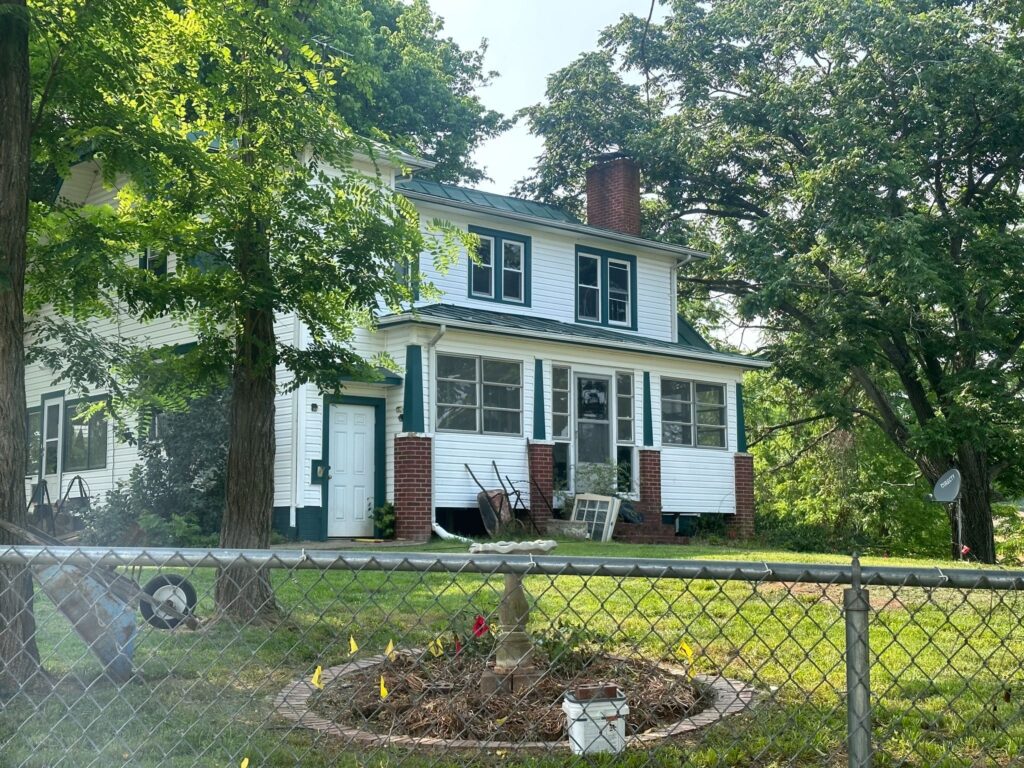
When the house John I had built burned during the Depression, Sallie and her 17 year old son, John Fitzhugh, utilized the wood on the farm to build a new home. They used timber from the farm to build the farmhouse, which was milled a few miles at a mill on Hartwood Road in Stafford County. This home is still standing. It is surrounded by several very old black walnut trees that shade the metal roof.
John’s love of the trees on Poplar Grove Farm is noted in The Free Lance-Star, December 1, 1980, Page 21:
John Fitzhugh says no one has enough money to buy his farm.
A farmer’s Sioux-like love of the land by Larry Evans
John Fitzhugh, a man whose girth gives him: bull-like appearance, sat behind the steering wheel of his old blue pickup truck and bounced across an open field on his Poplar Grove Farm. A coon dog trailed behind.
Then, stopping the truck at the edge of some woods, Fitzhugh climbed out and stood gazing at a massive poplar tree. He has lived with and -looked at the tree for more than half a century, but it still amazes him.
“This tree,” he said in a reverential tone of voice, “had to have been here before any white man ever came to this place.”
He stood there, ankle-deep in autumn leaves and pointed to a scar caused many years ago when two men tried to cut the tree down with a saw. Other men, too, have wanted to cut the tree, but he has always stopped them.
It was obvious as I stood alongside him listening on that fall day five years ago that John Fitzhugh considers the old tree to be a living symbol. With its permanence, with its radiant glory, the tree is a stately symbol of the enduring values and beauty” engendered by nature.
I knew that day that John Fitzhugh would no more think of putting the fate of the poplar in the hands of woodcutters than he would think of selling his 400-acre Stafford County farm to subdividers. After a lifetime of farming that ancestral land, the place is an integral part of him.
Some things have changed in five years, though.
During that time, John Fitzhugh has moved into his early 60s and is less able to handle the arduous labor of farming. And two droughts coupled with rampant inflation have made things difficult for him and other Virginia farmers.
During those five years, too, the suburban sprawl of Northern Virginia.
has gradually moved southward, causing developers to offer more and more money for land. The growth has extended to the edge of Fitzbugh’s Roseville neighborhood, and it: was inevitable that developers would call.
And so the other day, when I happened to be at Fitzhugh’s place, I asked him if he had been hearing from prospective buyers.
“Yeah, several of them have called,” he said. There was a stern look on his face that slowly slid into a smile.
“They always say they heard my farm is for sale. And so I ask them who told them that. They never can answer that question.”
Fitzhugh said he usually talks with the callers for a few minutes and then simply tells them he isn’t interested in selling. One man, though, was persistent to the point that it irritated him. “He said to me, ‘Everything’s got it’s price.’ What would you take for that farm?’
“I told him that neither he nor anybody else he knows has enough money to buy it,” said Fitzhugh.
He ended our conversation there. As he walked away to do some work in the fields, I thought of an old Sioux warrior named Tatanka Yotanka.
When the land of the Sioux was being taken over during the 19th century, Tatanka Yotanka said, “I wish all to know that I do not propose to sell any part of my country, nor will I have the whites cutting our timber along the river’s, more especially the oak. I am particularly fond of the little groves of oak trees.
I love to look at them, because they endure the wintry storm and the summer’s heat, and–not unlike ourselves-seem to flourish by them.” The Sioux knew him as Tatanka Yotanka. But the whites called him Sitting Bull.
The Free Lance-Star, December 1, 1980, Page 21 (See https://www.newspapers.com/article/the-free-lance-star-john-fitzhugh-poplar/201335780/ : accessed July 10, 2026)
In 1986, John French Fitzhugh, who had farmed the property and carefully selected the trees to preserve on the farm, died at Poplar Grove Farm after checking himself out of the hospital to die on the land he loved. He died moments after arriving at the farm, while seated on the porch, gazing out at the land and trees he loved.
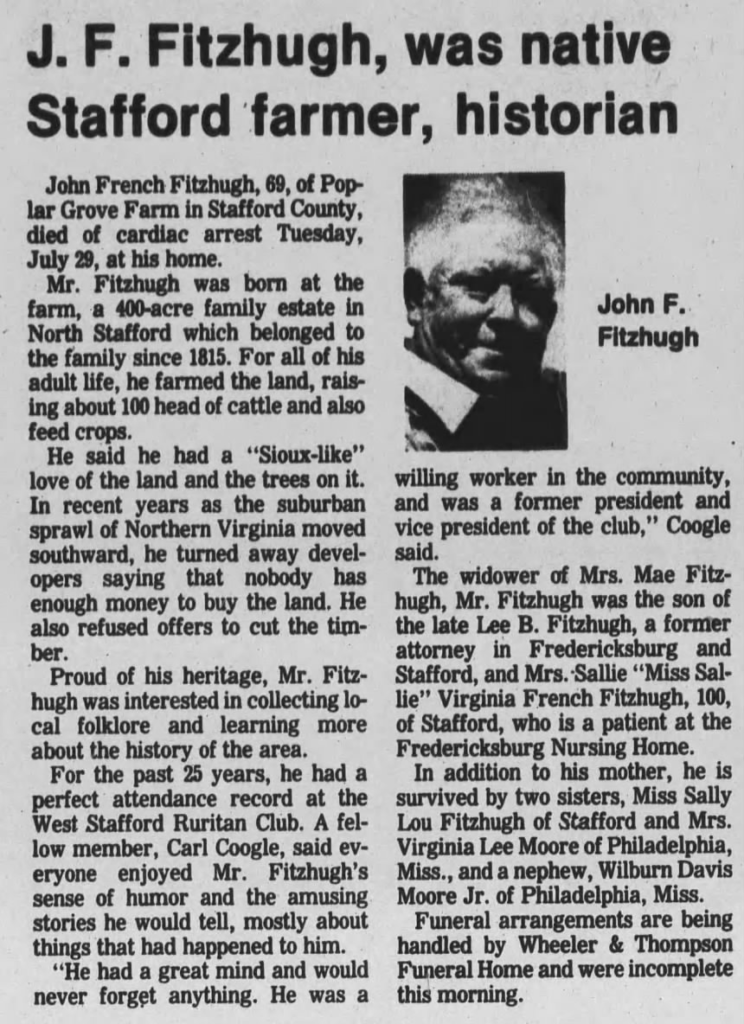
Just a few weeks later, Sallie herself passed away. The farm was left to Sallie’s daughters Virginia Lee Fitzhugh Moore and Sally Lou Fitzhugh. Virginia had moved to Mississippi, but Sally Lou was still living on the farm, so Virginia deeded her portion of the farm to Sally Lou. Sally Lou cared for the farm from 1986 until her death in 2023.
In 2007, Virginia’s granddaughter, Jennifer, moved to the farm with her small family. They built a new home on a hill overlooking the Century Forest.
2023 to present – Moore and Smith
After Sally Lou’s death in 2023, ownership of the farm and trust passed to Virginia’s son, Davis, who is Jennifer’s father. Together they began the project of restoring the family farmhouse, taking special care to preserve woodwork in the farmhouse that had been milled from trees cut from the Century Forest at Poplar Grove Farm.
In 2024, the family celebrated Earth day by planting native trees provided by the charity Tree Fredericksburg (https://www.poplar-grove.farm/shorts/earth-day-at-poplar-grove-farm/)
All of the wood floors in the farmhouse are of pine grown on Poplar Grove Farm and milled in the 1930s in Stafford County on Hartwood Road. These wood floors were refinished in 2025 by local craftsman, Ricky Abel.
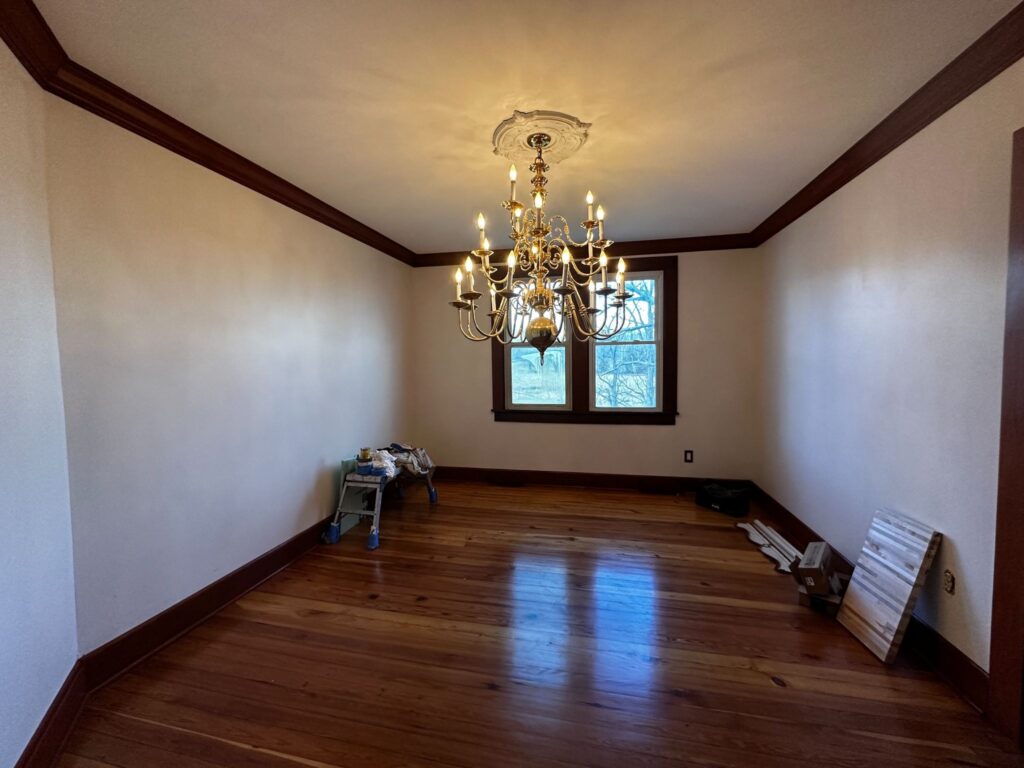
Trim on the lower floors is rough hewn, but on the ground floor they are finished more carefully, like here in the dining room. The crown molding in the dining room is not original and was added in 2025 by Fauquier carpenter, David Park.
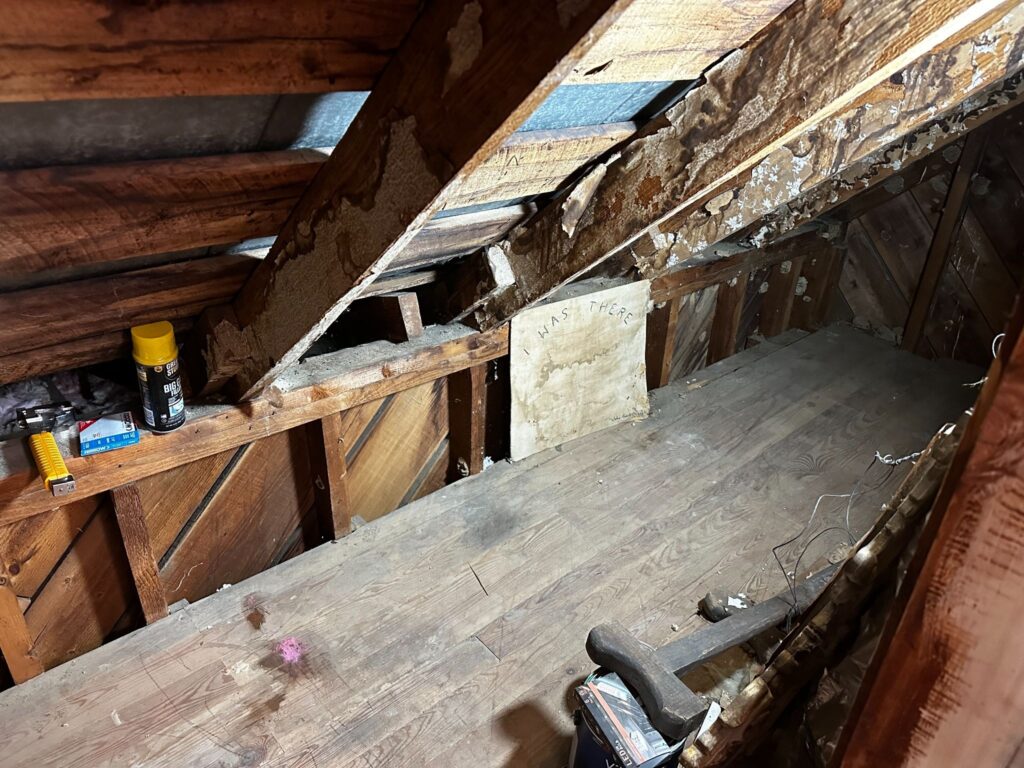
This image shows the inside of one of the closets with the metal roof above, pine floors beneath, and wood cladding throughout. This closet, like all of the rooms upstairs in the house, was wall papered along each side of the rafters like gift wrap until the family could afford wallboard. All of this lumber is believed to be from Poplar Grove Farm Century Forest.
Preserving Poplar Grove Farm Forest Legacy
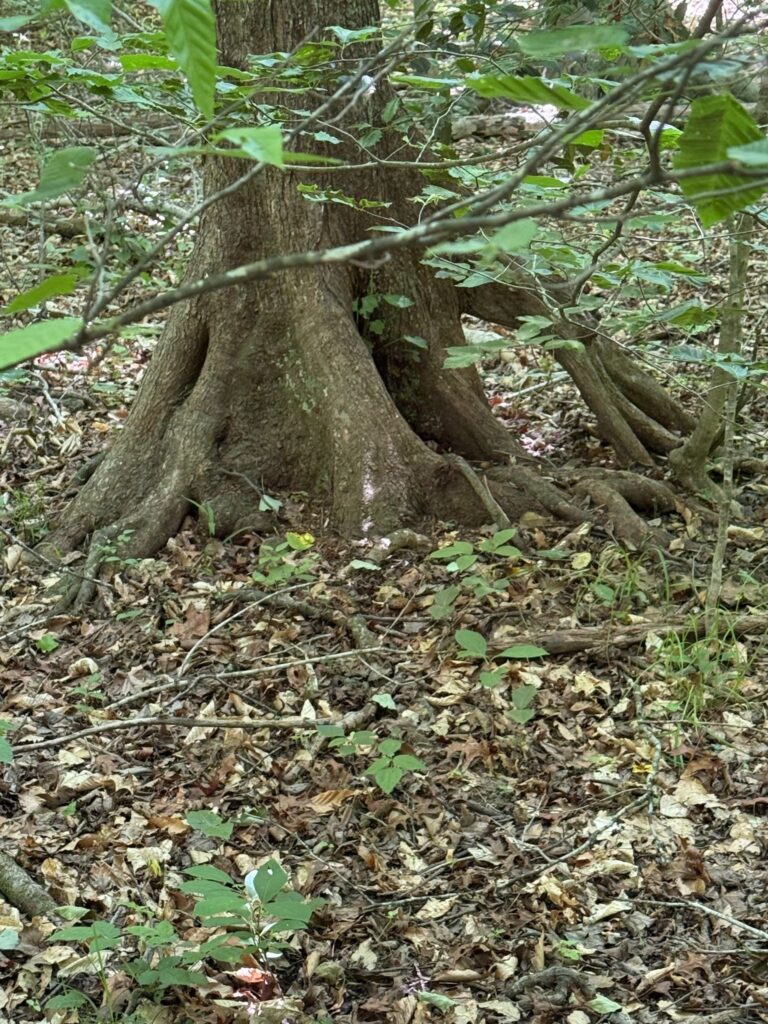
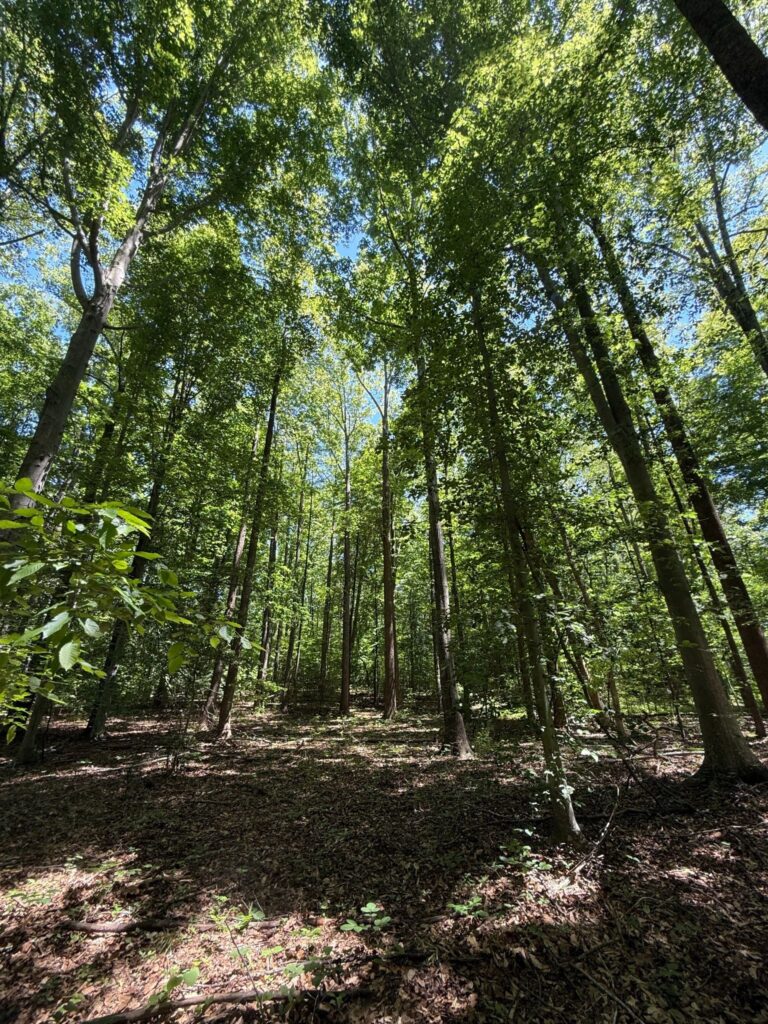
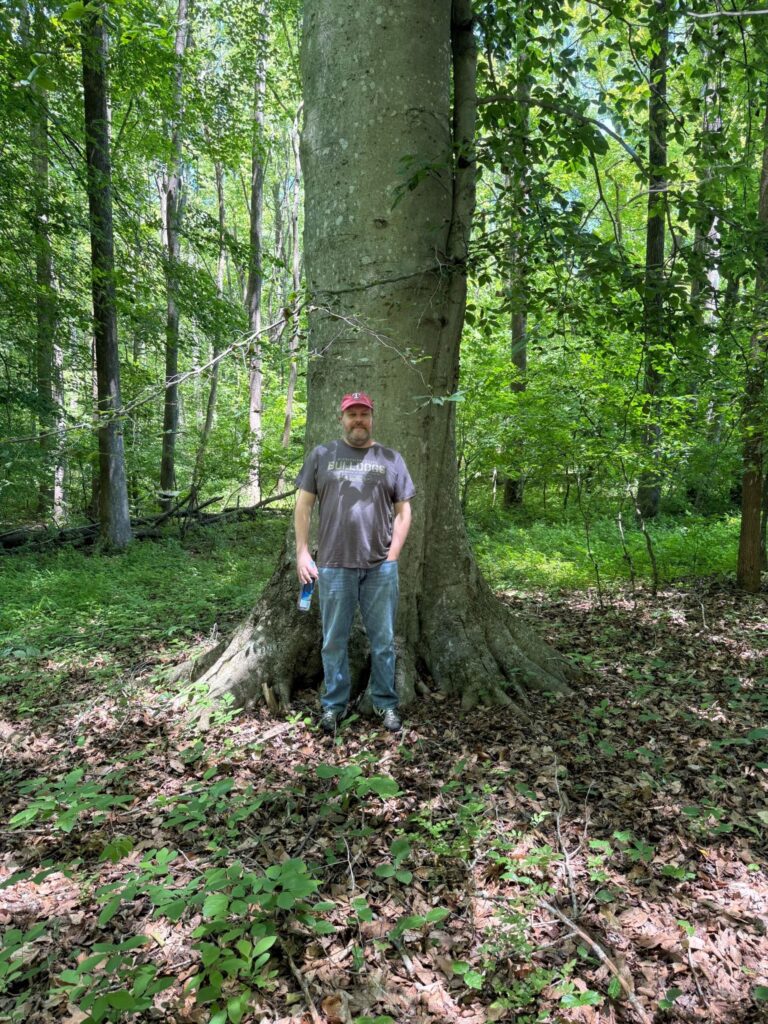
Today, the 115 acre portion of Poplar Grove Farm for which we are seeking a Century Forest designation passes over the Devil’s Backbone, the French Branch, and through trees curated and hand selected by John French Fitzhugh at the time of the last cutting in this area, which occurred before his death in 1986. John walked through this portion of the farm, marking trees for the loggers to harvest, carefully preserving specific trees for future generations. Although the properties on our north, east, south, and west have been sold for development, the Moore and Smith families continue to care for those trees, preserving our 8 generation legacy of caretaking this small portion of Virginia forest.
All of the following photographs were taken by Jennifer Smith in 2026 on the 115 acre Poplar Grove Farm Century Forest: